
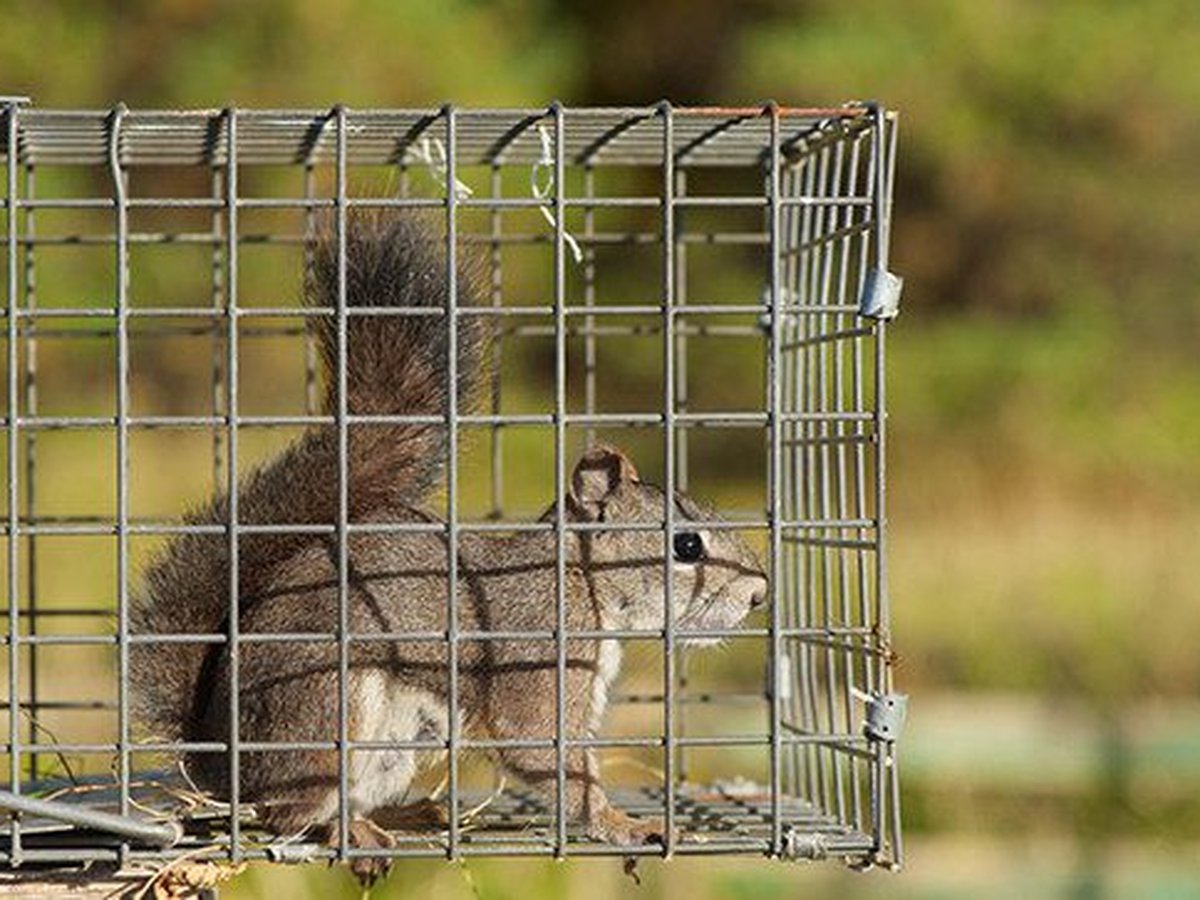
The Eastern gray squirrel is everywhere in Raleigh's oak and hickory canopy, and that same tree cover that makes so many Wake County neighborhoods leafy and shaded also gives squirrels a direct route from the branches onto a roofline. Unlike rats and mice, squirrels are active during the day, so most homeowners hear them differently — heavy scampering, thumping, or rolling sounds in the attic in daylight hours, especially in the early morning and evening.
Squirrels get into attics through gaps in fascia boards, damaged soffit panels, gable vents, or a roof-to-wall seam that's opened up over time, and a mother squirrel will often chew a hole specifically to create a nesting spot for a litter. Because a squirrel can be present with a litter of pups too young to follow her out, our removal method uses a one-way exclusion door wherever possible, which lets animals leave on their own schedule to forage but not re-enter, rather than trapping and potentially separating a mother from a nest of pups still inside.
Once the attic is confirmed clear, we seal the entry point and any other vulnerable roofline gaps with heavy-gauge material squirrels can't chew through, and check for chewed wiring or insulation damage while we're up there. Squirrel activity peaks in late winter and late summer during the two breeding seasons, so calls tend to cluster then. Call (689) 358-3644 for a roofline and attic inspection.
📞 Call (689) 358-3644