
πŸ“ž Call for a Free Quote: (689) 358-3644

Rodent Exclusion & Entry Point Sealing in Raleigh, NC

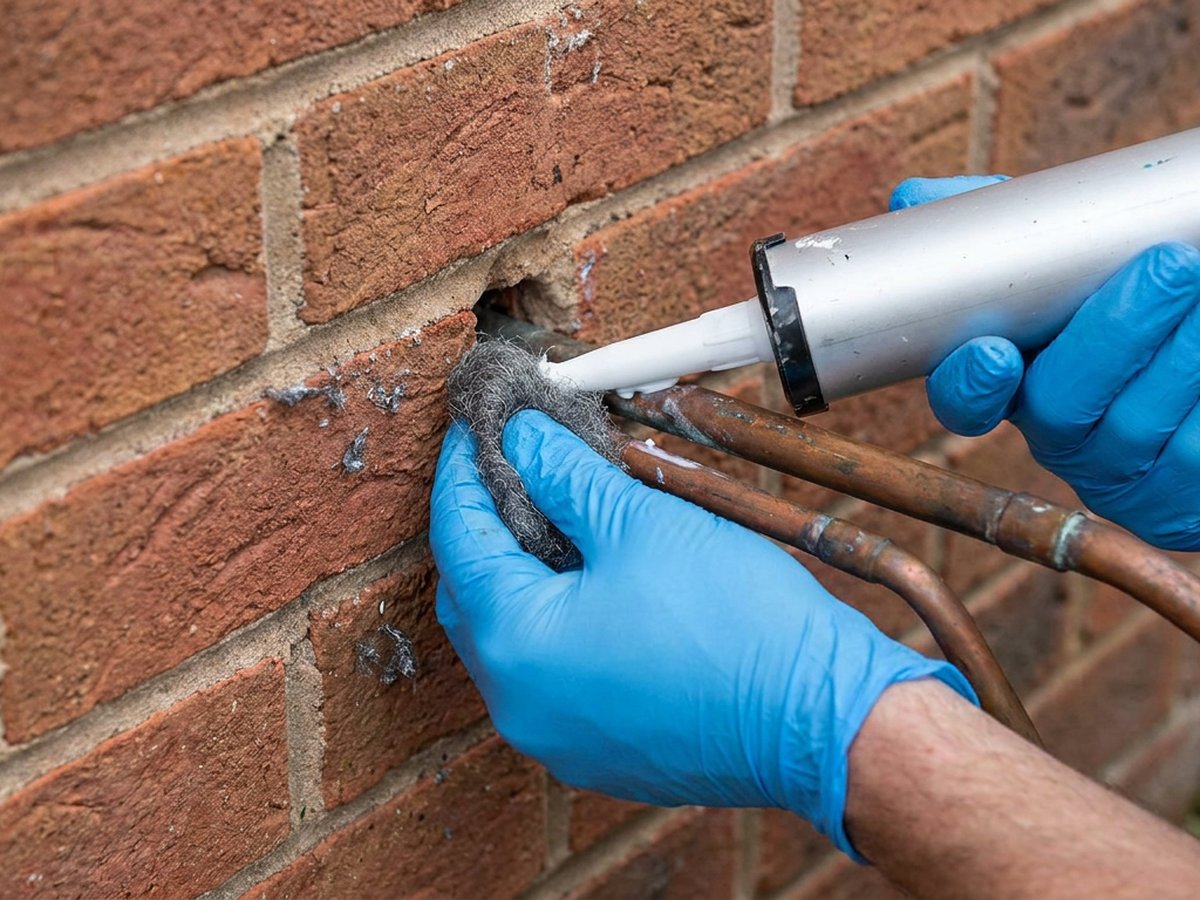
Sealing a rodent entry point around utility pipes with steel wool and sealant

Trapping removes the rodents that are already inside. Exclusion is the work that stops the next ones from getting in, and it's the single most important step in any rodent job we do in Wake County β€” without it, a home stays a revolving door no matter how many traps get set. We inspect the entire building envelope: roofline and fascia, soffit and gable vents, foundation vents, dryer and plumbing vents, utility line penetrations, garage door seals, and the crawl space access door, because a rat needs only a quarter-sized gap and a mouse needs only a dime-sized one.

Raleigh's housing stock makes this a different job on every street. Brick veneer homes common across the Triangle develop gaps where the veneer meets window and door trim as materials settle over decades. Newer HOA-community homes in Cary, Holly Springs, and Apex are built fast on production schedules, and we routinely find gaps around plumbing stacks, HVAC line sets, and dryer vents that were never properly sealed at final inspection, even in homes built within the last five years.

We use exclusion materials sized to actually stop rodents β€” heavy-gauge galvanized hardware cloth, copper mesh for tight gaps, and cementitious patching for foundation and masonry penetrations β€” never spray foam or steel wool alone, both of which a rodent can work through given time. Every sealed point is logged with a photo, and the work carries a workmanship warranty. Call (689) 358-3644 for a full exterior and interior exclusion inspection.

πŸ“ž Call (689) 358-3644

Request This Service

* Indicates required field

Why Exclusion Matters More Than Trapping

Trapping without exclusion is like bailing water without patching the leak β€” you'll clear the rodents you can catch, and new ones will keep finding the same open gap. Every job we run pairs the two: trapping to control the active population, exclusion to make sure the house stops being an easy target once it's clear. Homes that skip exclusion and only ever trap tend to call us back within a year with a new litter using the same unsealed entry point.

The Full Building Envelope Inspection

We walk the entire exterior at ground level and, where needed, from a ladder β€” rooflines, soffit returns, gable and ridge vents, foundation vents, brick veneer transitions, utility and plumbing penetrations, dryer vents, and garage door thresholds. Inside, we check the attic for daylight showing through the roof deck or soffit and the crawl space for gaps around the sill plate and foundation. Missing even one active gap can undo the rest of the work.

Materials That Actually Hold Up

A rodent's front teeth never stop growing, which means they gnaw constantly to keep them worn down β€” and that includes chewing through spray foam and steel wool alone. We use heavy-gauge galvanized hardware cloth for larger gaps, copper mesh for tight or irregular openings, and cement or mortar patching on masonry and foundation gaps, so the seal is actually permanent rather than a short-term deterrent.

Sealing Brick Veneer Homes

Brick veneer is common across Raleigh and Wake County, and as a house settles over decades, gaps open where the veneer meets window sills, door trim, and the foundation line β€” exactly the kind of narrow, shaded gap rats and mice favor. We match the sealing method to the material so the repair blends in and doesn't trap moisture against the brick, which can create a secondary problem.

New Construction Isn't Automatically Sealed

We regularly find open gaps in homes built within the last few years in Cary, Holly Springs, and Apex β€” around HVAC line sets, plumbing stacks, and dryer vents that production framing and trade crews leave unsealed because it isn't anyone's specific job to close them. A newer home is not automatically a rodent-proof one, and we treat every inspection the same regardless of the home's age.

Rooflines, Soffits & Squirrel-Sized Gaps

Squirrels and roof rats both work rooflines, so exclusion work up top has to account for larger gaps too β€” a damaged soffit panel, a gap where fascia has pulled away, or a chewed hole around a roof vent boot. We install heavier-gauge material and, where an animal is still active, a one-way exclusion door so anything inside can leave but not return before the final seal goes on.

Crawl Space & Foundation Sealing

Foundation vents, the crawl space access door, and gaps along the sill plate are among the most common entry points we find on older Raleigh homes with pier-and-beam foundations. We screen vents with rodent-proof mesh, repair or replace damaged access doors, and seal sill plate gaps β€” work that pairs naturally with a crawl space encapsulation project if moisture is also an issue.

Documentation & Warranty

Every exclusion job comes with a written, photo-documented report of what was found and what was sealed, so you have a record for your own files or for a future buyer. The sealing work itself is covered by our workmanship warranty β€” if a sealed point fails, we come back and fix it at no charge.

What Exclusion Work Costs

Pricing scales with the number and type of gaps that need sealing β€” a handful of small utility penetrations on a newer slab home is a smaller job than a full roofline, foundation, and vent sealing pass on an older house that's never had exclusion work done. We give you a per-point breakdown after the inspection so you can see exactly what you're paying for, and can prioritize the highest-risk gaps first if you want to phase the work.

Licensed, Insured Exclusion Technicians

Exclusion work often involves ladder access to rooflines and confined crawl space entry, so every technician is trained in the relevant safety practices and covered by our liability insurance. We're licensed for structural pest and exclusion work in North Carolina, and can provide proof of licensing and insurance to property managers or HOAs that require it before work begins.

Sealing Around Solar Panels & Roof Additions

Homes with solar panels, added roof vents, or other more recent rooftop additions sometimes have gaps around the new mounting hardware or wiring conduit that weren't part of the original roofline and don't always get inspected the same way older penetrations do. We check these newer additions specifically during a roofline exclusion pass, since squirrels and roof rats will use a fresh, unsealed gap around solar mounting brackets just as readily as an older vent opening.

How Long Exclusion Work Takes

A handful of straightforward gaps around a newer slab home's utility penetrations can often be sealed in a single visit lasting a couple of hours. A full-envelope exclusion on an older home with multiple roofline, foundation, and vent vulnerabilities takes longer and is sometimes split across more than one visit, particularly if ladder work on a steep or tall roofline needs its own dedicated time. We give you a realistic estimate of visit length once the inspection has identified everything that needs sealing.

Areas We Serve

Proudly providing rodent control across the region:

Get Rodent Exclusion & Entry Point Sealing in Raleigh Today

Fast response, upfront pricing, and friendly local pros. Call now for a free quote.

πŸ“ž Call (689) 358-3644