
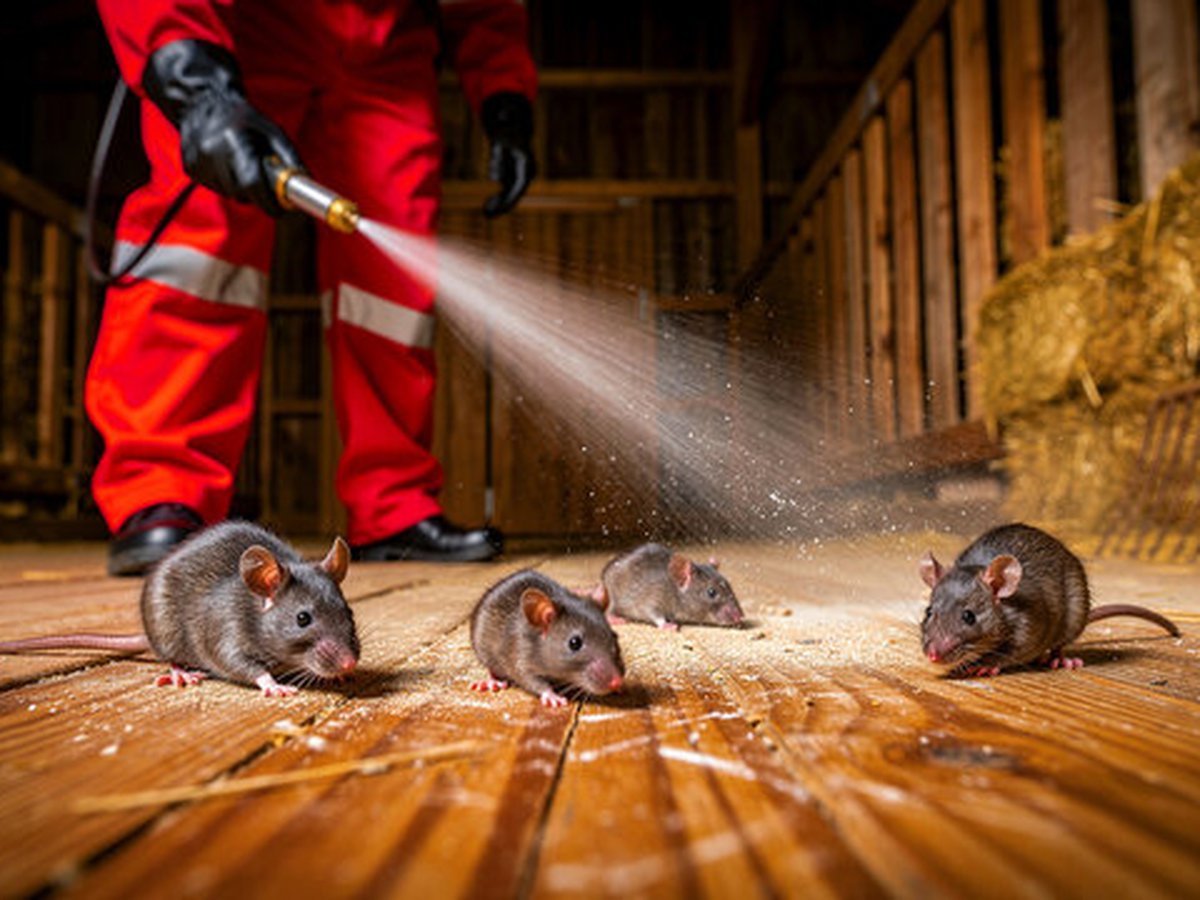
Raleigh sees two different rats, and they behave nothing alike. Norway rats are the heavier, ground-dwelling burrowers you'll find denned under porches, sheds, and crawl space foundations, especially near creeks, greenways, and older neighborhoods with mature landscaping. Roof rats are the leaner climbers that use the tree canopy and power lines to get onto a roofline and into an attic through gaps around fascia boards, gable vents, or a roof-to-wall seam that's opened up over time. Both show up year-round in the Piedmont's mild climate, but pressure spikes hardest from October through February, when falling temperatures push rodents out of the yard and into the warmth of a wall void or attic.
Our rat removal process starts with an inspection, not a bait drop. We walk the exterior looking for burrows, rub marks, droppings, and gnaw damage, then check the attic and crawl space for the same signs indoors. That tells us whether we're dealing with Norway rats working the perimeter, roof rats using the canopy, or both — which changes where we place traps and where we focus exclusion work. We trap live, active infestations first, because sealing a home with rats still inside just traps them in your walls.
Once activity is controlled, we seal every entry point we found with rat-proof materials — heavy-gauge hardware cloth, galvanized flashing, and mortar patching, never spray foam or steel wool alone, both of which a rat can chew through in an evening. You get a written report of what we found, what we sealed, and a warranty on that exclusion work. Call for a free inspection at (689) 358-3644 — most Wake County jobs are scheduled within a day or two, sooner for active infestations.
📞 Call (689) 358-3644